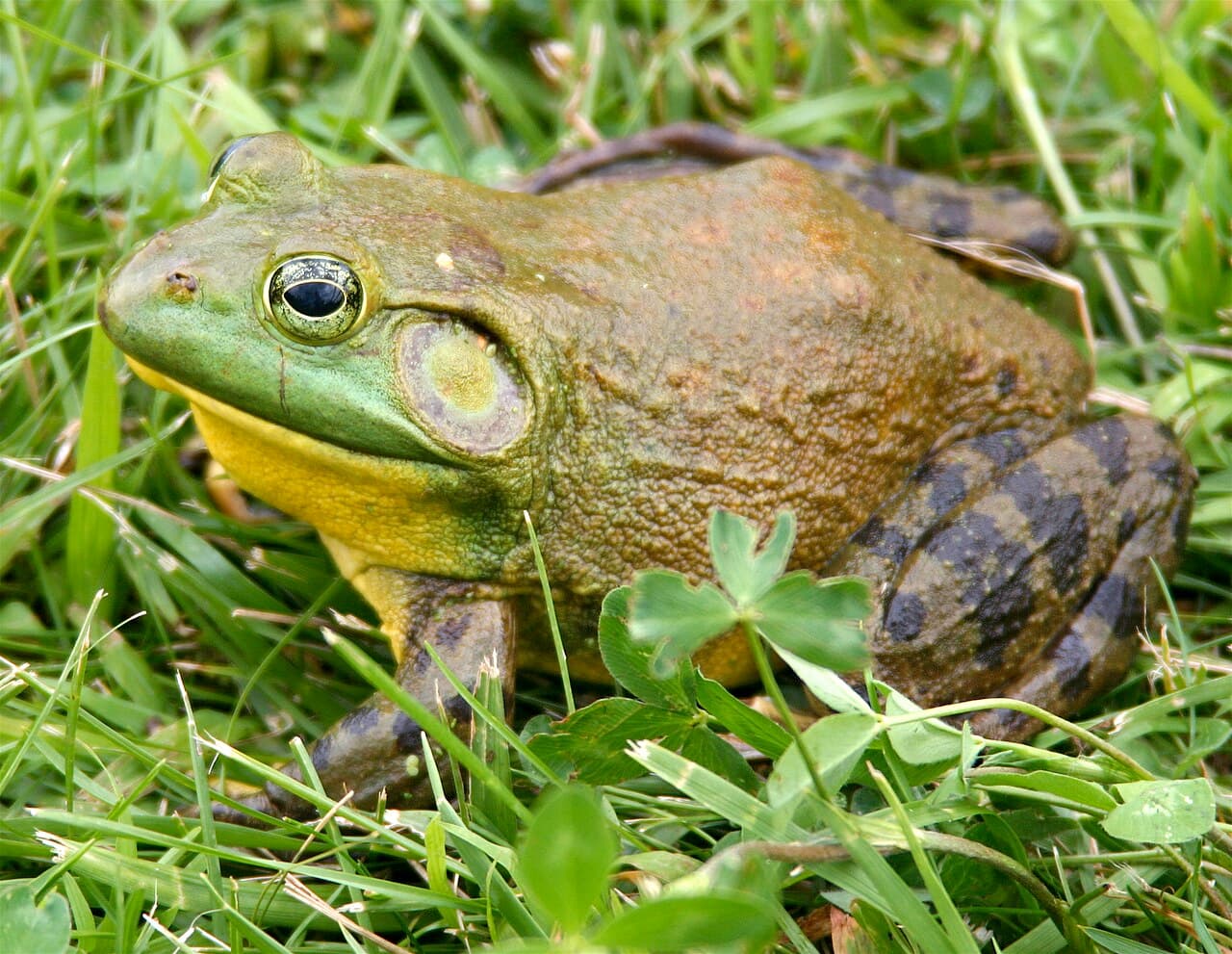
American Bullfrog
Lithobates catesbeianus
Photo: Carl D. Howe · CC BY-SA 2.5 · via Wikimedia Commons
Found one?
Leave it where it is
It lives its whole life in a small patch of habitat. Watch, take a photo, and let it carry on.
- 01Leave it at its pond.
- 02Handle frogs only with wet hands, free of sunscreen or bug spray — their skin absorbs chemicals.
Stay safe
- Wash your hands after handling any amphibian.
Pick your state for the local rules. TIDE covers New Jersey, Pennsylvania and Maryland.
Verifying against GBIF…
Conservation status
IUCN Red ListLeast Concern and native to the East — but invasive in the western US and many countries, where it eats native frogs.
What Least Concern means
Assessed as widespread and abundant. This describes the global population, not fishing pressure or legal protection.
On your plate
Not Typically Eaten
Frog legs are eaten, and Pennsylvania allows a licensed harvest in season. TIDE doesn't show recipes for wild amphibians.
Conservation status and seafood sustainability are two different questions. A species can be Least Concern globally and still be overfished, protected or unsustainable where you are.
Habitat
Ponds, lakes and slow rivers with plenty of vegetation
Range
Native to eastern North America; introduced around the world
Size
Up to about 20 cm body length
Diet
Insects, crayfish, fish, other frogs — even small birds
Lifespan
8–10 years in the wild
Group
amphibian
North America's largest frog.
Males call with a deep 'jug-o-rum' that carries across a lake.
Tadpoles can take two years or more to become frogs.