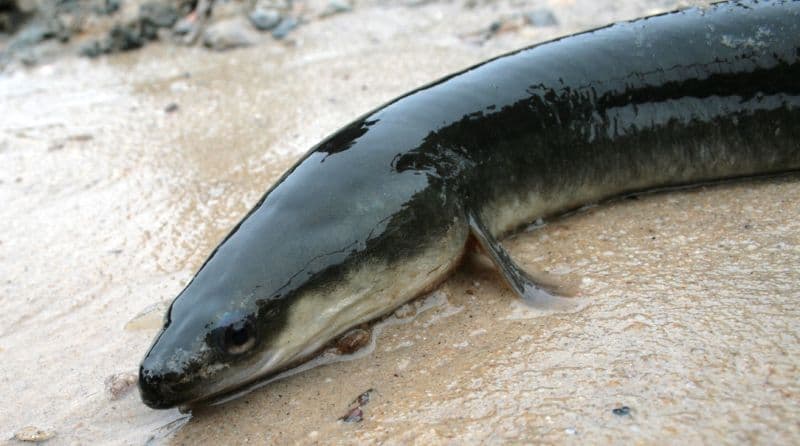
American Eel
Anguilla rostrata
Photo: Clinton & Charles Robertson from RAF Lakenheath, UK & San Marcos, TX, USA & UK · CC BY 2.0 · via Wikimedia Commons
Keep or release?
Where are you fishing?
Size limits, seasons and female rules are set by each state. Pick yours to get a verdict.
TIDE covers New Jersey, Pennsylvania and Maryland rules, plus federal protections everywhere.
Verifying against GBIF…
Conservation status
IUCN Red ListEndangered on the IUCN Red List. Dams block its migrations, turbines kill adults heading to sea, and young glass eels are harvested for the global eel trade — yet it's still legally fished with limits in most states.
What Endangered means
Facing a very high risk of extinction in the wild.
On your plate
Let It Go
Legal to keep within limits in some states, but it's globally Endangered. TIDE holds back recipes and suggests letting it go.
TIDE does not show recipes for species currently assessed as Endangered, even where a commercial fishery exists.
Conservation status and seafood sustainability are two different questions. A species can be Least Concern globally and still be overfished, protected or unsustainable where you are.
Habitat
Rivers, streams, lakes, estuaries — and the open ocean to spawn
Range
Atlantic coast and rivers from Greenland to Venezuela
Size
Up to about 1.2 m (females are larger)
Diet
Insects, worms, crayfish and small fish
Lifespan
Often 15–20 years before migrating to spawn once
Group
fish
Every American eel hatches in the Sargasso Sea, far out in the Atlantic, and drifts to the coast as a see-through 'glass eel'.
Adults live for years in rivers, then swim back to the Sargasso Sea to spawn once and die.
Nobody has ever observed American eels spawning in the wild.
Try this instead
Sustainable seafood alternatives
While American Eel stocks recover, these choices carry a lighter footprint.