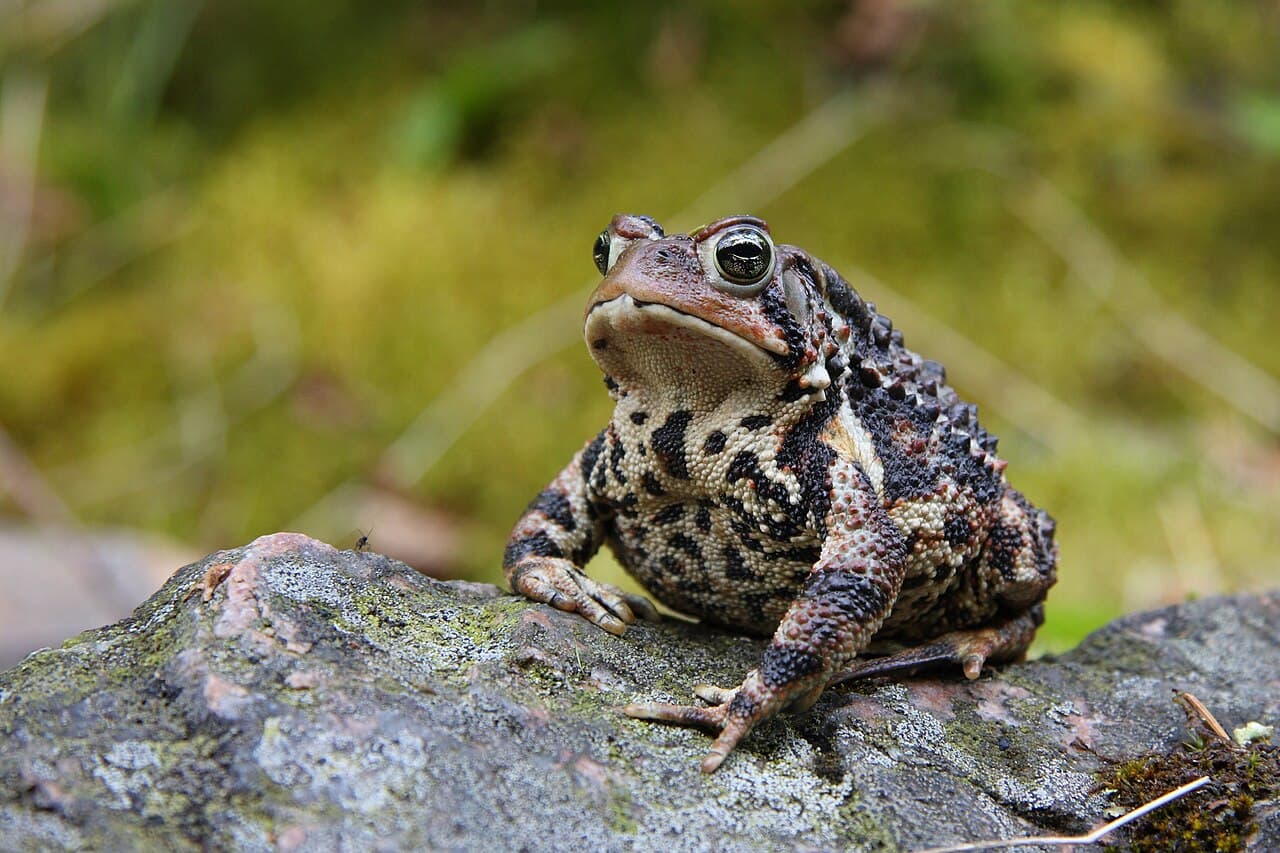
American Toad
Anaxyrus americanus
Photo: Cephas · CC BY-SA 3.0 · via Wikimedia Commons
Found one?
Leave it where it is
It lives its whole life in a small patch of habitat. Watch, take a photo, and let it carry on.
- 01Leave it in your garden — it's free pest control.
- 02Moving one? Wet your hands first and keep it low to the ground.
Stay safe
- The glands behind its eyes release a toxin that can make dogs sick — keep pets away.
- Touching toads doesn't cause warts, but do wash your hands.
Pick your state for the local rules. TIDE covers New Jersey, Pennsylvania and Maryland.
Verifying against GBIF…
Conservation status
IUCN Red ListLeast Concern and common in yards, gardens and woods.
What Least Concern means
Assessed as widespread and abundant. This describes the global population, not fishing pressure or legal protection.
On your plate
Not Typically Eaten
Not food — its skin glands produce toxins.
Conservation status and seafood sustainability are two different questions. A species can be Least Concern globally and still be overfished, protected or unsustainable where you are.
Habitat
Gardens, fields and forests; breeds in shallow ponds
Range
Eastern North America
Size
5–9 cm
Diet
Insects, slugs and worms — thousands each season
Lifespan
Up to 10 years
Group
amphibian
Males trill for up to half a minute at a time in spring ponds.
It eats by flicking out a sticky tongue faster than you can see.
Those 'warts' are glands, not a disease.