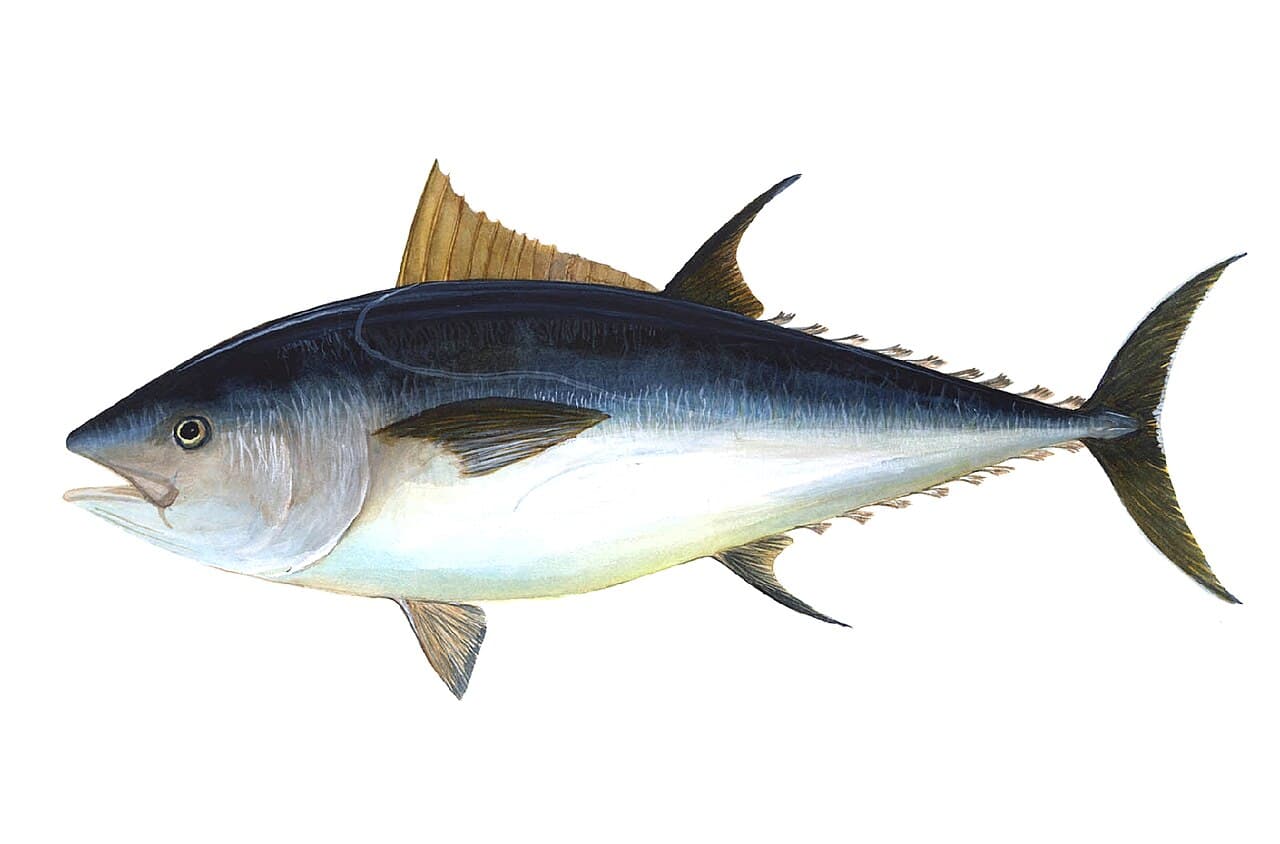
Atlantic Bluefin Tuna
Thunnus thynnus
Photo: Unknown author · Public domain · via Wikimedia Commons
Keep or release?
Where are you fishing?
Size limits, seasons and female rules are set by each state. Pick yours to get a verdict.
TIDE covers New Jersey, Pennsylvania and Maryland rules, plus federal protections everywhere.
Verifying against GBIF…
Conservation status
IUCN Red ListIUCN moved Atlantic bluefin from Endangered to Least Concern in 2021 after quota cuts allowed the population to rebuild. That change describes population trend, not fishing pressure — this is exactly the case where conservation status and seafood advice diverge.
What Least Concern means
Assessed as widespread and abundant. This describes the global population, not fishing pressure or legal protection.
On your plate
Check Local Guidance
Bluefin is no longer Endangered, and it is still the species most sustainable-seafood programmes ask you to skip. Luxury demand drives prices high enough to make illegal fishing worthwhile.
Sustainable seafood programs currently advise against this species, so TIDE shows alternatives instead of recipes.
Regional fishing status
Eastern Atlantic and Mediterranean stocks have rebuilt under ICCAT quotas. Pacific bluefin remains far below historic biomass, and most bluefin sold is still rated 'Avoid' by Seafood Watch.
If you buy it
- Pole-and-line or troll-caught albacore is the closest lower-impact swap.
- US-caught skipjack is the most abundant tuna on the market.
- If you do buy bluefin, ask for the catch documentation — legal bluefin is tracked fish by fish.
Conservation status and seafood sustainability are two different questions. A species can be Least Concern globally and still be overfished, protected or unsustainable where you are.
Habitat
Open ocean and coastal waters, diving to more than 1,000 m
Range
North Atlantic and Mediterranean, spawning in the Gulf of Mexico and Mediterranean
Size
Up to 3 m and 680 kg
Diet
Herring, mackerel, squid and crustaceans
Lifespan
Up to 40 years
Group
fish
Bluefin are warm-blooded — they keep muscle, eye and brain temperature above the surrounding sea, which is why they can hunt in cold water at speed.
A single bluefin sold for 333 million yen (about US$3.1 million) at Tokyo's Toyosu market in 2019.
They cross the Atlantic in both directions and return to the spawning ground where they were born.
Try this instead
Sustainable seafood alternatives
While Atlantic Bluefin Tuna stocks recover, these choices carry a lighter footprint.