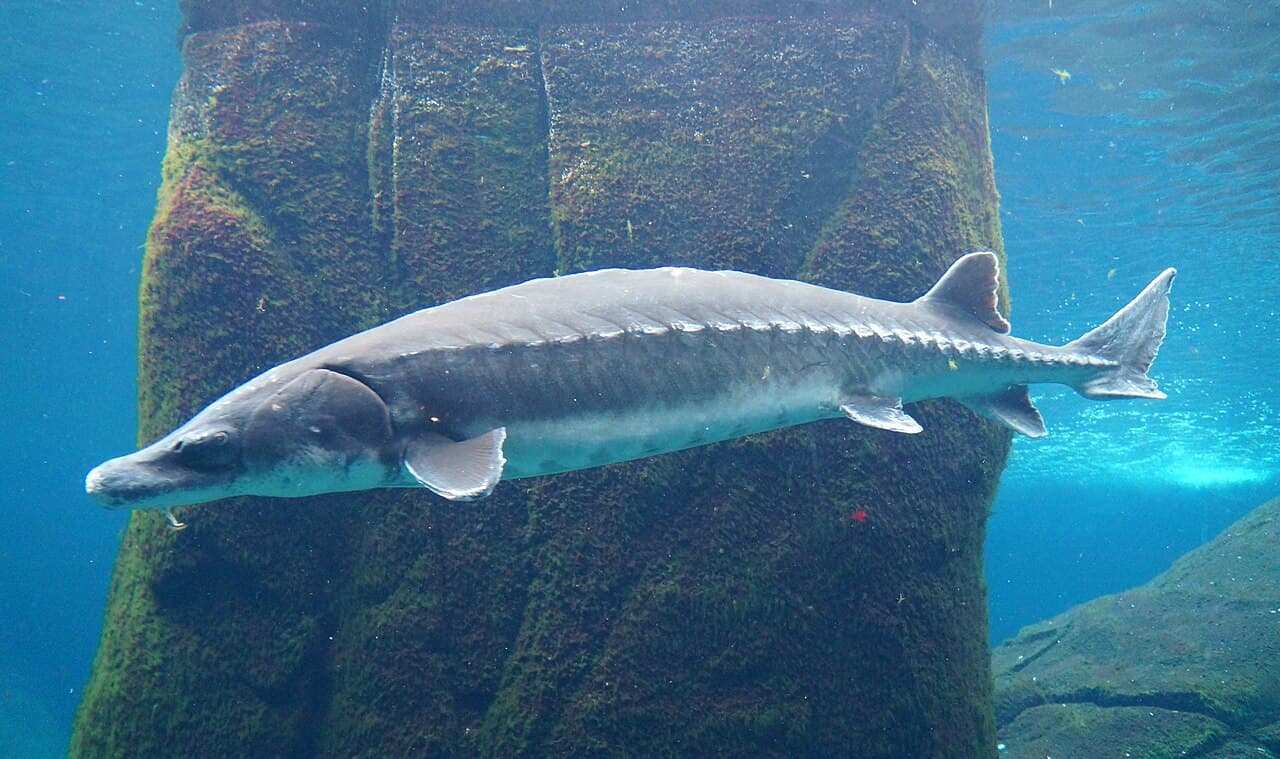
Atlantic Sturgeon
Acipenser oxyrinchus
Photo: Jiaqian AirplaneFan · CC BY 3.0 · via Wikimedia Commons
Keep or release?
Release it
It's protected — keeping one is illegal.
Protected: Endangered under the Endangered Species Act since 2012: illegal to possess, harm or harass one, alive or dead.
Keep it in the water, cut the line close to the hook, and report it to sturg911@noaa.gov (NJ: 609-748-2020).
NOAA Fisheries — Atlantic sturgeonRules checked Sep 26, 2026. Regulations change — confirm before you keep anything.
Verifying against GBIF…
Conservation status
IUCN Red ListEndangered under the US Endangered Species Act since 2012. Overfished for caviar a century ago, it has never recovered in most rivers — including the Delaware.
What Vulnerable means
Facing a high risk of extinction in the wild.
Legally protected
Listed as endangered by NOAA Fisheries under the Endangered Species Act (2012).
On your plate
Do Not Consume
Federally protected. It's illegal to possess one, alive or dead.
Conservation status and seafood sustainability are two different questions. A species can be Least Concern globally and still be overfished, protected or unsustainable where you are.
Habitat
Coastal ocean; it returns to large rivers to spawn
Range
Atlantic coast from Canada to Florida
Size
Up to about 4 m
Diet
Worms, clams, shrimp and insects, vacuumed from the bottom
Lifespan
Up to 60 years
Group
fish
Sturgeon have existed in some form for more than 100 million years.
Instead of scales, rows of bony plates called scutes run along its body.
Atlantic sturgeon leap clear of the water, and scientists still debate why.
Try this instead
Sustainable seafood alternatives
Atlantic Sturgeon is protected and must not be taken. These are lower-impact choices that are not.