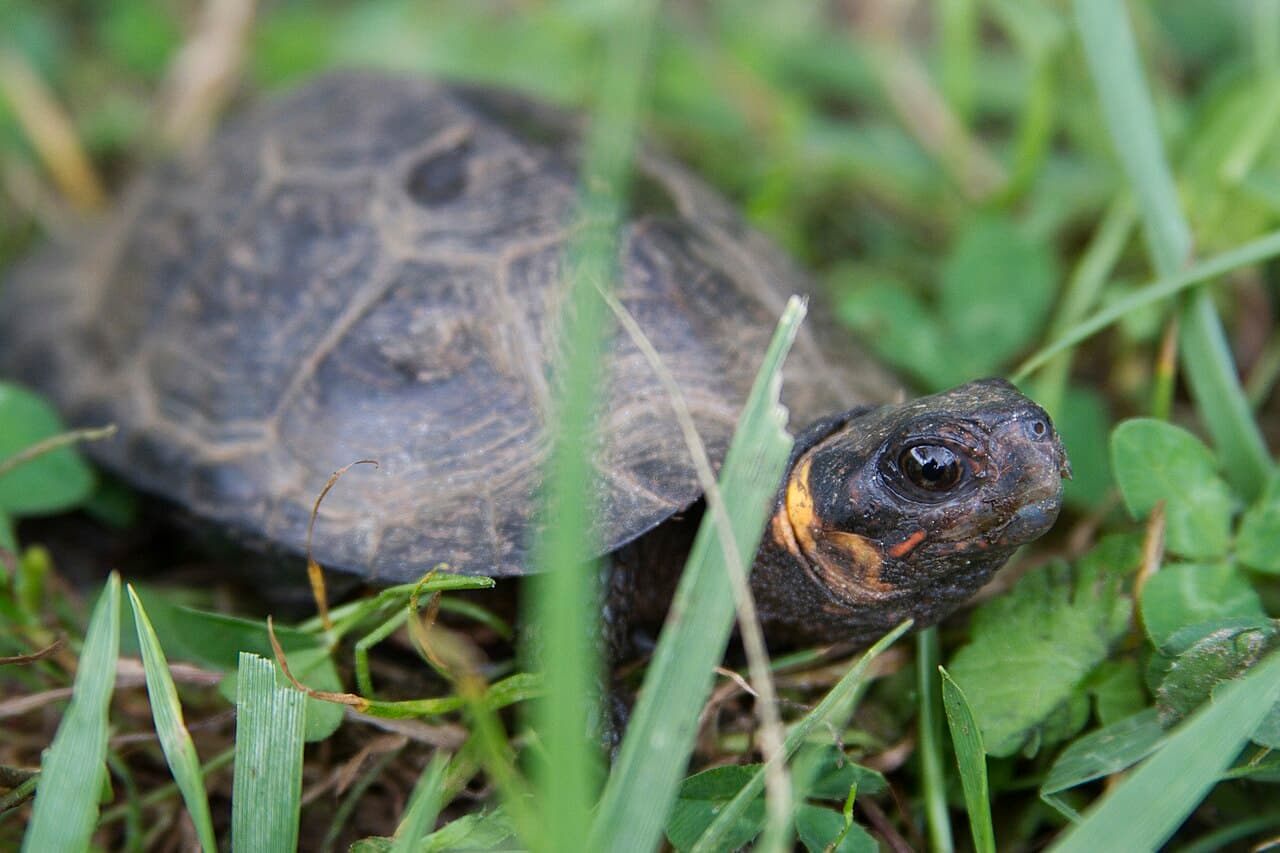
Bog Turtle
Glyptemys muhlenbergii
Photo: U.S. Fish and Wildlife Service Southeast Region · Public domain · via Wikimedia Commons
Found one?
Leave it where it is
Taking it is illegal. The best thing you can do is let it carry on.
Illegal to take: Listed as threatened under the Endangered Species Act (northern population). Never collect or disturb one.
- 01Leave it exactly where you found it and step away carefully — its habitat is fragile.
- 02Take a photo from a distance and note the location.
- 03Report it to US Fish & Wildlife or your state agency. Don't post the location publicly — poachers look.
Source: US Fish & Wildlife Service — Bog turtle ↗ · checked Sep 2026
Verifying against GBIF…
Conservation status
IUCN Red ListCritically Endangered globally, federally threatened, and State Endangered in New Jersey. One of the rarest turtles in North America.
What Critically Endangered means
Facing an extremely high risk of extinction in the wild.
Legally protected
Listed as threatened under the US Endangered Species Act (northern population).
On your plate
Do Not Consume
Federally protected — never collect or disturb one.
Conservation status and seafood sustainability are two different questions. A species can be Least Concern globally and still be overfished, protected or unsustainable where you are.
Habitat
Spring-fed wet meadows and fens with soft mud and tussocks
Range
Scattered colonies from New York to Maryland, and the southern Appalachians
Size
8–11 cm shell — North America's smallest turtle
Diet
Insects, snails, worms, seeds and berries
Lifespan
Can exceed 40 years
Group
turtle
A bright orange or yellow blotch on each side of its head gives it away.
It lives in wet meadows so small some colonies fit in a backyard.
Grazing cattle can help it, by keeping bog vegetation open.
Try this instead
Sustainable seafood alternatives
Bog Turtle is protected and must not be taken. These are lower-impact choices that are not.