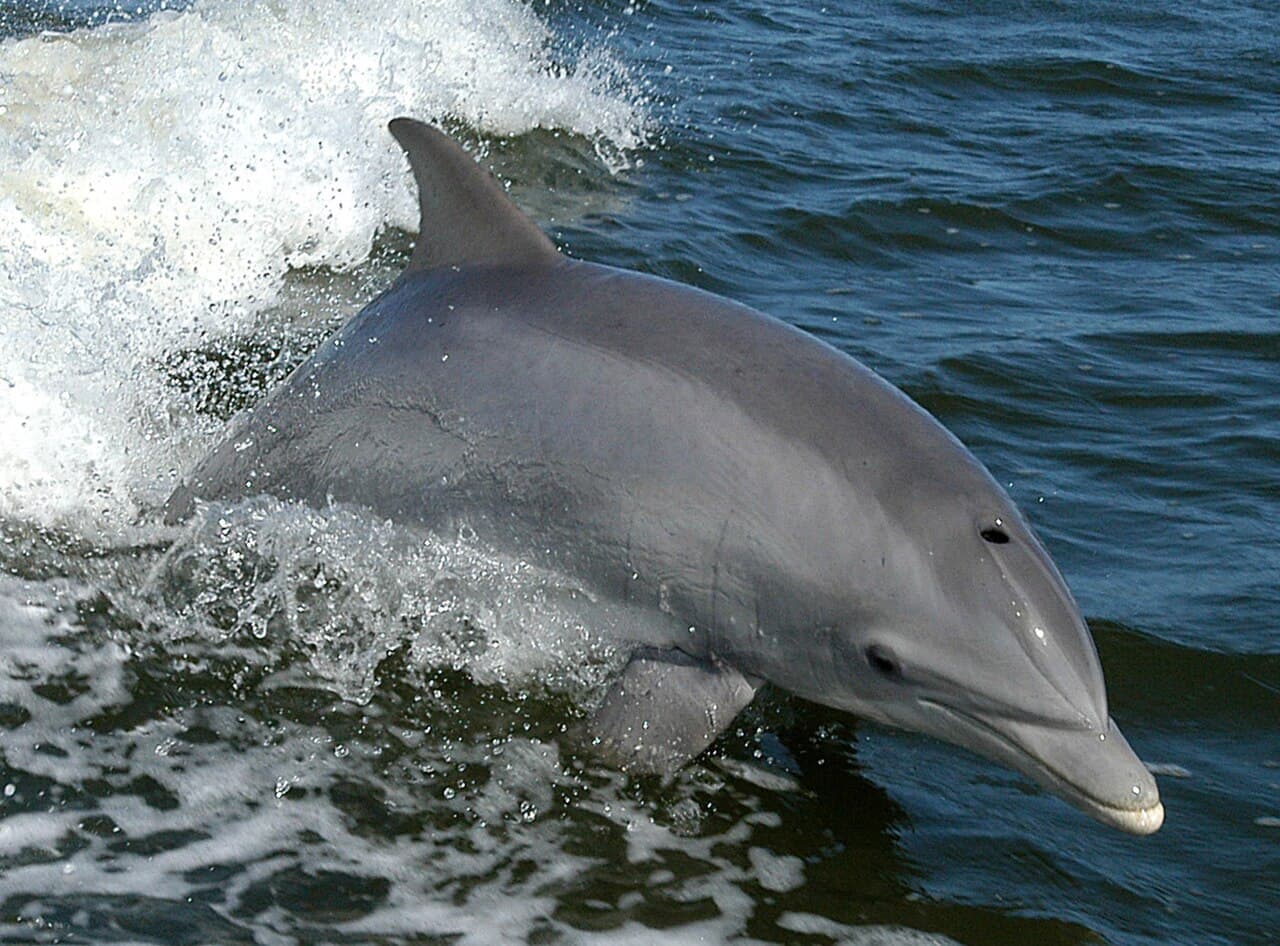
Common Bottlenose Dolphin
Tursiops truncatus
Photo: NASA · Public domain · via Wikimedia Commons
Found one?
Leave it where it is
Taking it is illegal. The best thing you can do is let it carry on.
Protected: US Marine Mammal Protection Act; feeding or harassing wild dolphins is a federal offence.
- 01Keep your distance — NOAA recommends staying at least 100 yards from whales, and 50 yards from dolphins, seals and sea turtles.
- 02Never feed, touch or swim toward it.
- 03Stranded, injured or entangled? Call NOAA's hotline at (866) 755-6622.
Pick your state for the local rules. TIDE covers New Jersey, Pennsylvania and Maryland.
Verifying against GBIF…
Conservation status
IUCN Red ListLeast Concern globally, though specific coastal and estuarine populations are small, isolated and at real risk.
What Least Concern means
Assessed as widespread and abundant. This describes the global population, not fishing pressure or legal protection.
Legally protected
US Marine Mammal Protection Act; feeding or harassing wild dolphins is a federal offence.
On your plate
Do Not Consume
Protected under the US Marine Mammal Protection Act. It is illegal to hunt, harass, capture or feed wild dolphins in US waters.
Conservation status and seafood sustainability are two different questions. A species can be Least Concern globally and still be overfished, protected or unsustainable where you are.
Habitat
Coastal waters, bays, estuaries and open ocean
Range
Temperate and tropical waters worldwide
Size
2–4 m, 150–650 kg
Diet
Fish, squid and crustaceans
Lifespan
40–60 years
Group
mammal
Each dolphin develops a signature whistle that functions like a name, and others will copy it to call that individual.
They sleep one brain hemisphere at a time, keeping one eye open and continuing to surface for air.
Some populations use tools — Shark Bay dolphins carry sponges on their beaks to protect them while foraging on the seabed.
Try this instead
Sustainable seafood alternatives
Common Bottlenose Dolphin is protected and must not be taken. These are lower-impact choices that are not.