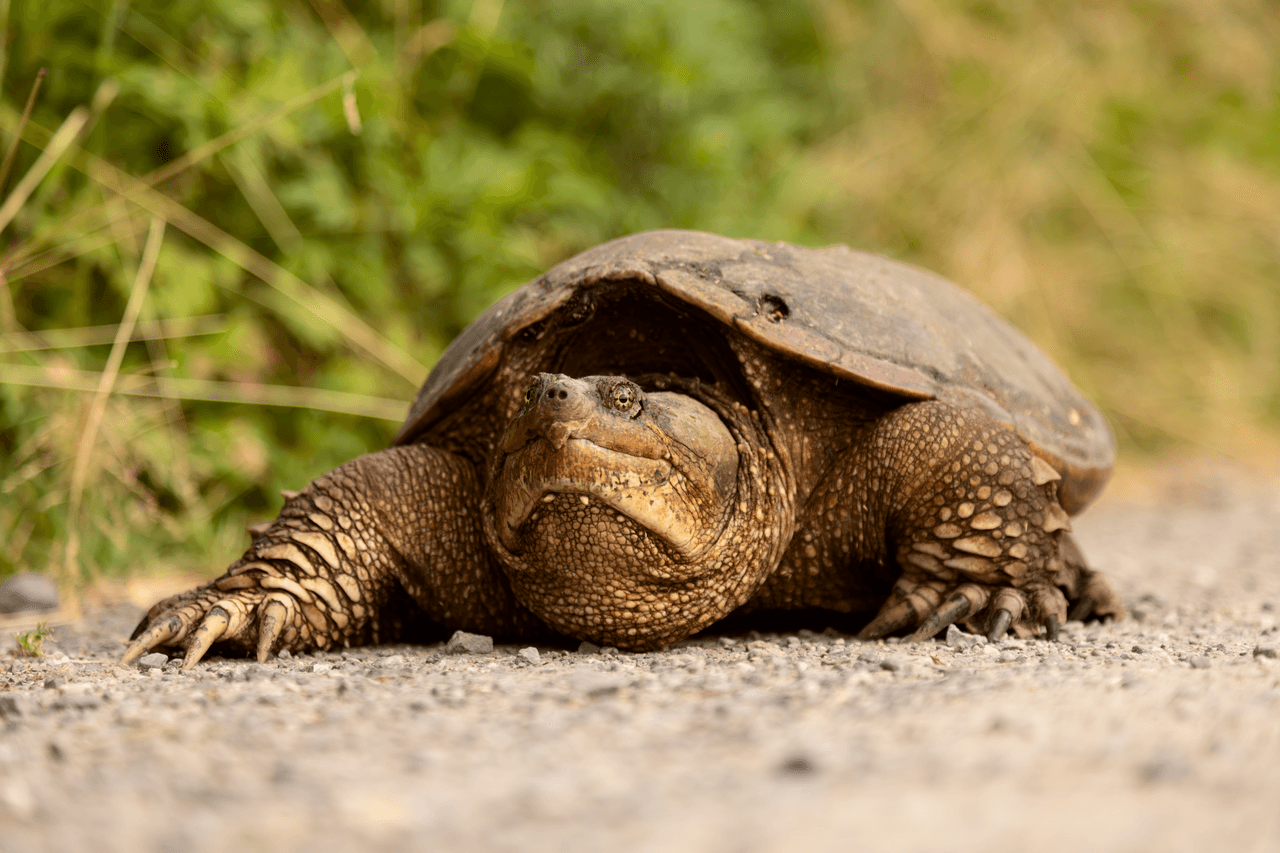
Common Snapping Turtle
Chelydra serpentina
Photo: Chuck Homler, Focus On Wildlife · CC BY-SA 4.0 · via Wikimedia Commons
Found one?
Leave it where it is
It lives its whole life in a small patch of habitat. Watch, take a photo, and let it carry on.
- 01In June, females leave the water to lay eggs — that's why you see them on roads and lawns. Let her finish.
- 02Crossing a road? Move it across in the direction it was heading, only if it's safe for you.
- 03The safest way to move one: nudge it onto a car mat or into a bin and slide it, rather than lifting it.
Stay safe
- Never pick it up by the tail — you can injure its spine.
- Its neck reaches much farther than you'd expect. Keep your hands clear of the front half of the shell.
- Wash your hands afterwards — reptiles commonly carry Salmonella.
Pick your state for the local rules. TIDE covers New Jersey, Pennsylvania and Maryland.
Verifying against GBIF…
Conservation status
IUCN Red ListLeast Concern and widespread. Pennsylvania and New Jersey allow a regulated harvest in summer and fall.
What Least Concern means
Assessed as widespread and abundant. This describes the global population, not fishing pressure or legal protection.
On your plate
Not Typically Eaten
A licensed harvest exists in season, but TIDE doesn't show recipes: long-lived turtles build up contaminants from water and sediment, and all turtles can carry Salmonella.
Conservation status and seafood sustainability are two different questions. A species can be Least Concern globally and still be overfished, protected or unsustainable where you are.
Habitat
Ponds, rivers, marshes — almost any fresh water with a soft bottom
Range
Eastern North America, from southern Canada to the Gulf coast
Size
20–36 cm shell; large adults over 15 kg
Diet
Fish, frogs, plants, carrion — nearly anything
Lifespan
40 years or more
Group
turtle
It can't pull fully into its small shell, so it defends itself by snapping.
In the water it usually swims away; it's on land that it strikes.
Nesting females may travel far from water to find the right soil.