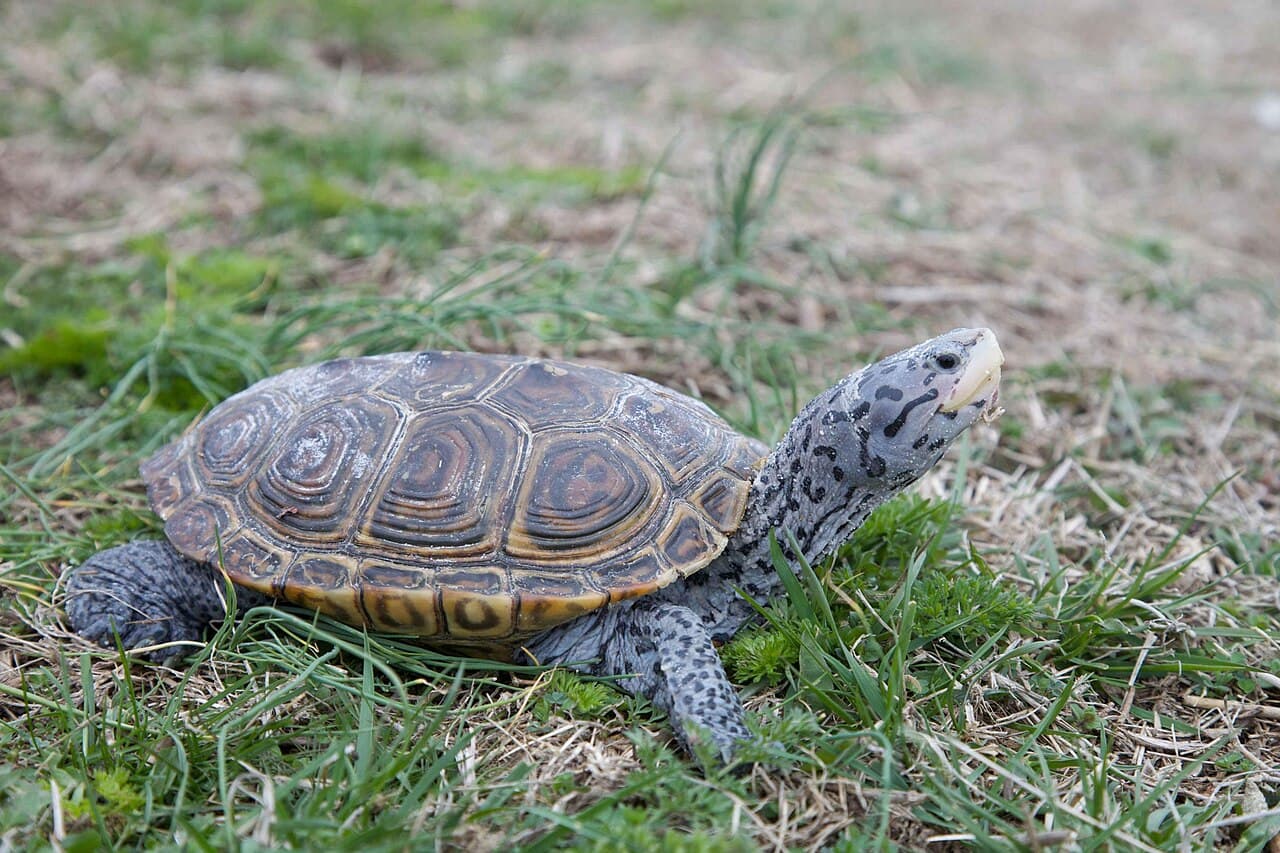
Diamondback Terrapin
Malaclemys terrapin
Photo: Ryan Hagerty · Public domain · via Wikimedia Commons
Found one?
Leave it where it is
It lives its whole life in a small patch of habitat. Watch, take a photo, and let it carry on.
- 01Leave it where it is. In June, females cross marsh roads to nest on higher ground.
- 02On a road? Carry it across in the direction it was heading, only if safe.
- 03Crabbing? Check pots often and use excluders — terrapins need air.
Stay safe
- Wash your hands after touching any turtle — reptiles commonly carry Salmonella.
Pick your state for the local rules. TIDE covers New Jersey, Pennsylvania and Maryland.
Verifying against GBIF…
Conservation status
IUCN Red ListVulnerable globally. It lives in the same salt marshes crabbers work — and drowns in crab pots that lack an excluder.
What Vulnerable means
Facing a high risk of extinction in the wild.
On your plate
Not Typically Eaten
Not food. Terrapin soup nearly wiped it out a century ago.
Conservation status and seafood sustainability are two different questions. A species can be Least Concern globally and still be overfished, protected or unsustainable where you are.
Habitat
Salt marshes, tidal creeks and brackish bays
Range
Atlantic and Gulf coasts from Cape Cod to Texas
Size
Females 15–23 cm; males much smaller
Diet
Snails, clams, crabs and worms
Lifespan
Often 25–40 years
Group
turtle
The only turtle in the US that lives exclusively in brackish water.
Maryland's state reptile, and the University of Maryland's mascot.
Every terrapin has a unique pattern of spots on its skin.