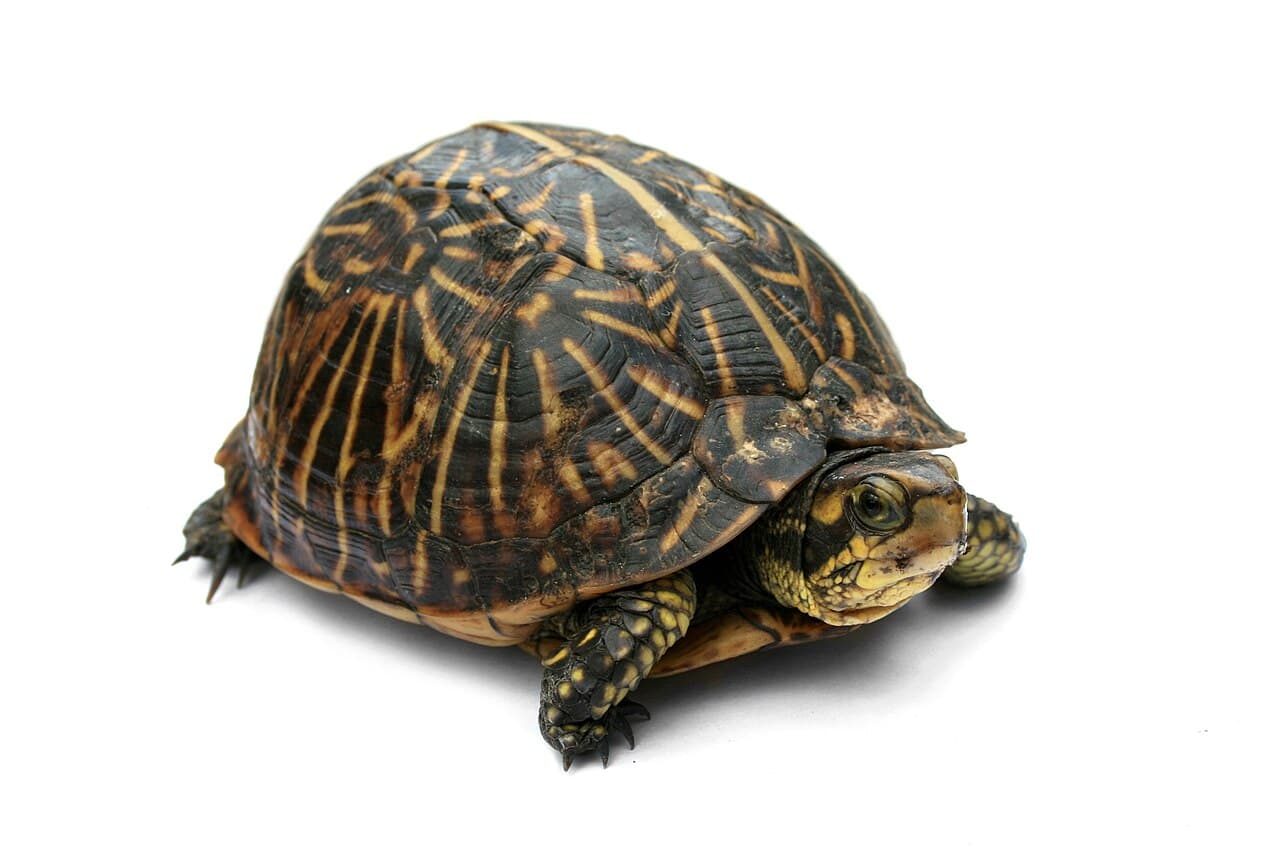
Eastern Box Turtle
Terrapene carolina
Photo: “Jonathan Zander ( Digon3 )" · CC BY-SA 3.0 · via Wikimedia Commons
Found one?
Leave it where it is
It lives its whole life in a small patch of habitat. Watch, take a photo, and let it carry on.
- 01Leave it where you found it. Box turtles spend their whole lives in a small home range.
- 02Never move it to a 'better' spot — moved box turtles wander trying to get home.
- 03Don't take it home. It's illegal in PA and NJ, and wild box turtles rarely do well in captivity.
Stay safe
- Wash your hands after touching any turtle — reptiles commonly carry Salmonella.
Pick your state for the local rules. TIDE covers New Jersey, Pennsylvania and Maryland.
Verifying against GBIF…
Conservation status
IUCN Red ListVulnerable globally. It's a Species of Special Concern in New Jersey, and Pennsylvania allows no one to take one from the wild.
What Vulnerable means
Facing a high risk of extinction in the wild.
On your plate
Not Typically Eaten
Not food — and taking one is illegal in Pennsylvania and New Jersey.
Conservation status and seafood sustainability are two different questions. A species can be Least Concern globally and still be overfished, protected or unsustainable where you are.
Habitat
Woodlands, fields and forest edges near water
Range
Eastern United States, from Maine to Florida and west to Michigan
Size
11–15 cm shell
Diet
Worms, slugs, insects, berries and mushrooms
Lifespan
Often 50 years or more
Group
turtle
A hinge on its lower shell lets it close up completely, like a box.
Males usually have red eyes; females' eyes are brown.
The same turtle may live in the same few acres of woods for decades.