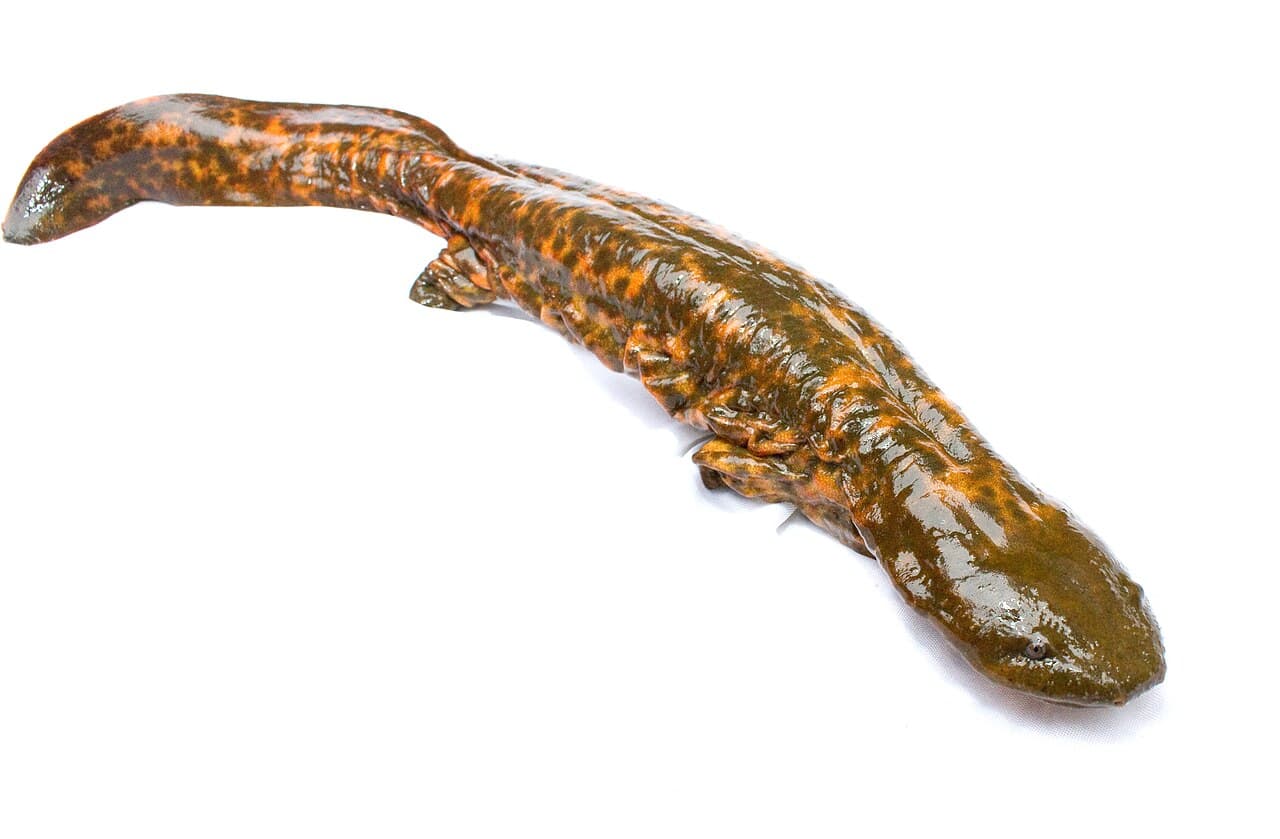
Eastern Hellbender
Cryptobranchus alleganiensis
Photo: Brian Gratwicke · CC BY 2.0 · via Wikimedia Commons
Found one?
Leave it where it is
It lives its whole life in a small patch of habitat. Watch, take a photo, and let it carry on.
- 01Leave it in the stream.
- 02Don't lift or move big flat rocks — each one can be a hellbender's shelter or nest.
- 03Report the sighting to the PA Fish & Boat Commission: records of this declining species are valuable.
Stay safe
- Harmless to people. Handle it only if you must, with wet hands — its skin is delicate.
Pick your state for the local rules. TIDE covers New Jersey, Pennsylvania and Maryland.
Verifying against GBIF…
Conservation status
IUCN Red ListVulnerable globally. Pennsylvania's state amphibian, closed to all taking there, and proposed for federal listing as endangered in December 2024.
What Vulnerable means
Facing a high risk of extinction in the wild.
On your plate
Not Typically Eaten
Not food — and illegal to take in Pennsylvania.
Conservation status and seafood sustainability are two different questions. A species can be Least Concern globally and still be overfished, protected or unsustainable where you are.
Habitat
Cold, clean, fast-flowing rocky streams
Range
Appalachian and Ozark streams from New York to Georgia and Missouri
Size
Up to about 70 cm — North America's largest salamander
Diet
Crayfish, mostly
Lifespan
30 years or more
Group
amphibian
It breathes mostly through its wrinkled skin, so it needs cold, oxygen-rich water.
Nicknames include 'snot otter' and 'mud devil'.
Fathers guard the eggs under a rock for weeks.