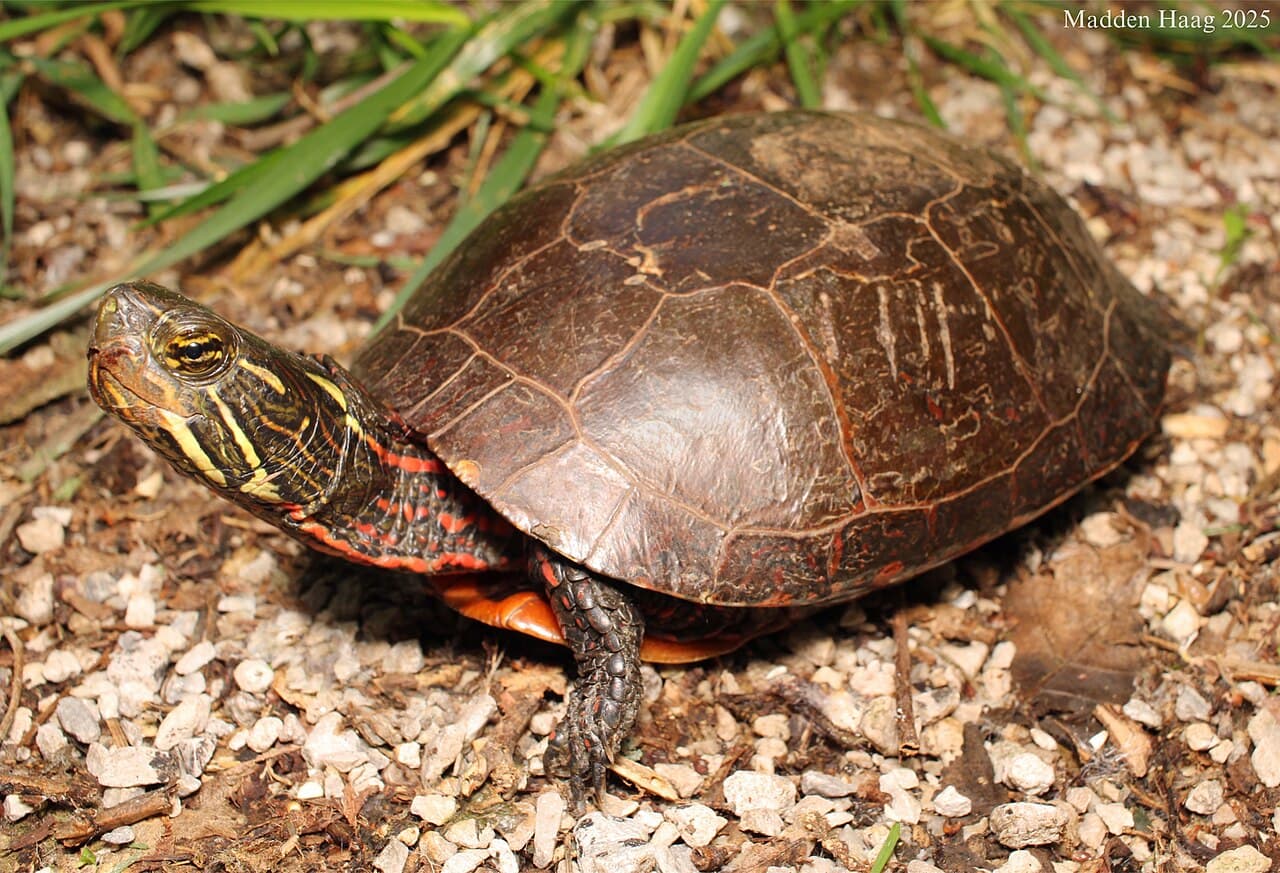
Painted Turtle
Chrysemys picta
Photo: MH Herpetology · CC BY-SA 4.0 · via Wikimedia Commons
Found one?
Leave it where it is
It lives its whole life in a small patch of habitat. Watch, take a photo, and let it carry on.
- 01Leave it where it is — it belongs to that pond.
- 02Crossing a road? Carry it across in the direction it was heading.
- 03Don't take it home: New Jersey allows no wild turtle to be kept as a pet.
Stay safe
- Wash your hands after touching any turtle — reptiles commonly carry Salmonella.
Pick your state for the local rules. TIDE covers New Jersey, Pennsylvania and Maryland.
Verifying against GBIF…
Conservation status
IUCN Red ListLeast Concern and common — the turtle you're most likely to see basking on a log.
What Least Concern means
Assessed as widespread and abundant. This describes the global population, not fishing pressure or legal protection.
On your plate
Not Typically Eaten
Not food. Leave it in its pond.
Conservation status and seafood sustainability are two different questions. A species can be Least Concern globally and still be overfished, protected or unsustainable where you are.
Habitat
Ponds, lakes and slow streams with basking logs
Range
Across southern Canada and most of the United States
Size
10–18 cm shell
Diet
Aquatic plants, insects, snails and small fish
Lifespan
Often 20–40 years
Group
turtle
The most widespread native turtle in North America.
Hatchlings of some populations survive their first winter in the nest, partly frozen.
Yellow stripes on its head and red markings on the shell edge give it its name.