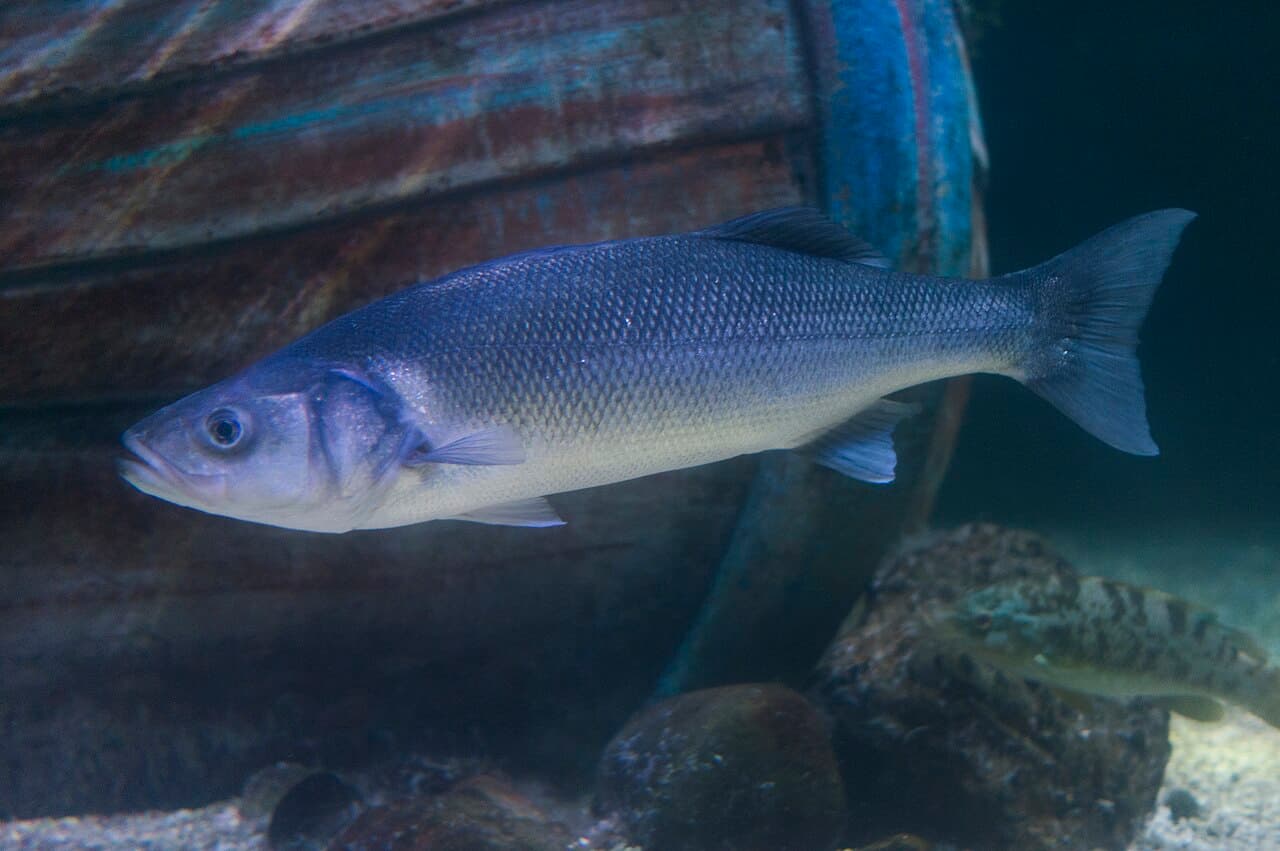
European Sea Bass
Dicentrarchus labrax
Photo: Miguel Mendez from Malahide, Ireland · CC BY 2.0 · via Wikimedia Commons
Keep or release?
Where are you fishing?
Size limits, seasons and female rules are set by each state. Pick yours to get a verdict.
TIDE covers New Jersey, Pennsylvania and Maryland rules, plus federal protections everywhere.
Verifying against GBIF…
Conservation status
IUCN Red ListAssessed as Near Threatened. Northeast Atlantic wild stocks declined sharply enough in the 2010s to trigger emergency EU catch restrictions, which have since allowed partial recovery.
What Near Threatened means
Close to qualifying for a threatened category, or likely to qualify in the near future.
On your plate
Common Seafood
Sold widely as branzino. Most of what reaches restaurants is farmed in the Mediterranean.
Regional fishing status
Wild Northeast Atlantic stocks are under strict EU limits after steep declines. Farmed production in Greece, Turkey and Spain supplies most of the market.
If you buy it
- Farmed branzino with ASC certification is the most consistent choice.
- Wild line-caught sea bass is preferable to netted fish, which take more spawning adults.
Conservation status and seafood sustainability are two different questions. A species can be Least Concern globally and still be overfished, protected or unsustainable where you are.
Habitat
Coastal waters, estuaries and lagoons
Range
Eastern Atlantic from Norway to Senegal, plus the Mediterranean and Black Sea
Size
Commonly 50 cm, up to 1 m and 12 kg
Diet
Small fish, shrimp, crabs and molluscs
Lifespan
Up to 25 years
Group
fish
Known as branzino in Italy, loup de mer in France and robalo in Spain — the same fish under four market names.
Juveniles use estuaries as nurseries, which ties the species' health directly to coastal water quality.
It was one of the first marine fish farmed commercially in Europe.
Cook this species