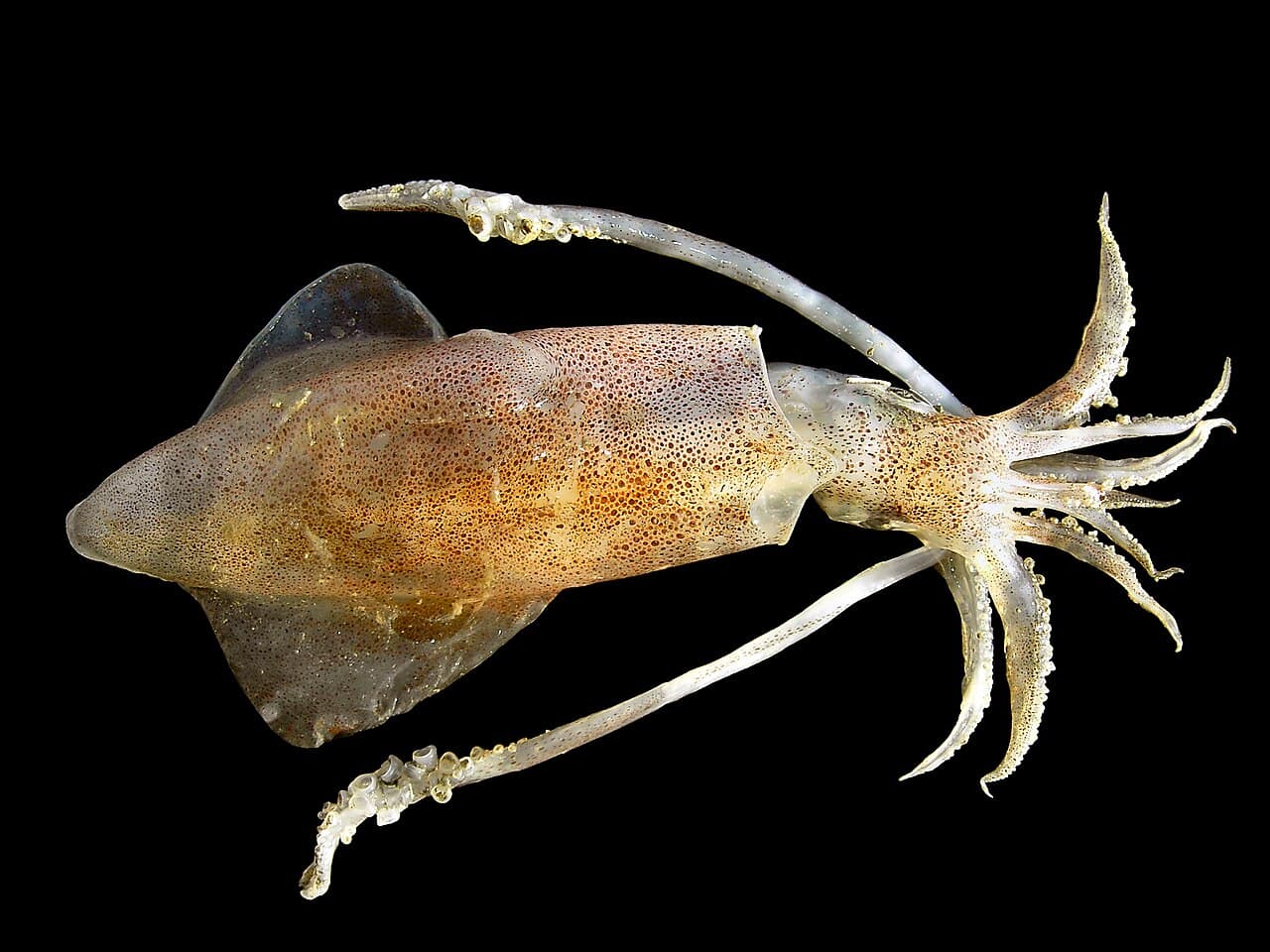
European Squid
Loligo vulgaris
Photo: Hans Hillewaert · CC BY-SA 4.0 · via Wikimedia Commons
Keep or release?
Where are you fishing?
Size limits, seasons and female rules are set by each state. Pick yours to get a verdict.
TIDE covers New Jersey, Pennsylvania and Maryland rules, plus federal protections everywhere.
Verifying against GBIF…
Conservation status
IUCN Red ListData Deficient — there is not enough information for a global assessment, which is itself the finding. Squid live fast and die young, so populations turn over annually and respond to ocean conditions rather than accumulating long-term fishing damage.
What Data Deficient means
Not enough information exists to assess extinction risk. This is an absence of data, not a sign of health.
On your plate
Common Seafood
Sold as calamari. Short lifespans and high reproductive output make squid relatively resilient to fishing.
Regional fishing status
Managed loosely in most regions; jigging fisheries are selective with minimal bycatch, trawl fisheries less so.
If you buy it
- Jig-caught squid is highly selective and touches no seabed.
- Trawled squid carries more bycatch and habitat impact.
Conservation status and seafood sustainability are two different questions. A species can be Least Concern globally and still be overfished, protected or unsustainable where you are.
Habitat
Open water over continental shelves, 20–250 m
Range
Eastern Atlantic from the North Sea to West Africa, plus the Mediterranean
Size
Mantle up to 40 cm
Diet
Fish, crustaceans and other squid
Lifespan
1–2 years
Group
cephalopod
Squid move by jet propulsion, firing water through a funnel that can swivel to steer.
Chromatophores in the skin let them flash patterns for camouflage and for signalling to each other.
As some fish stocks have declined in warming seas, squid and other cephalopods have increased — a measurable shift in what the ocean produces.
Cook this species