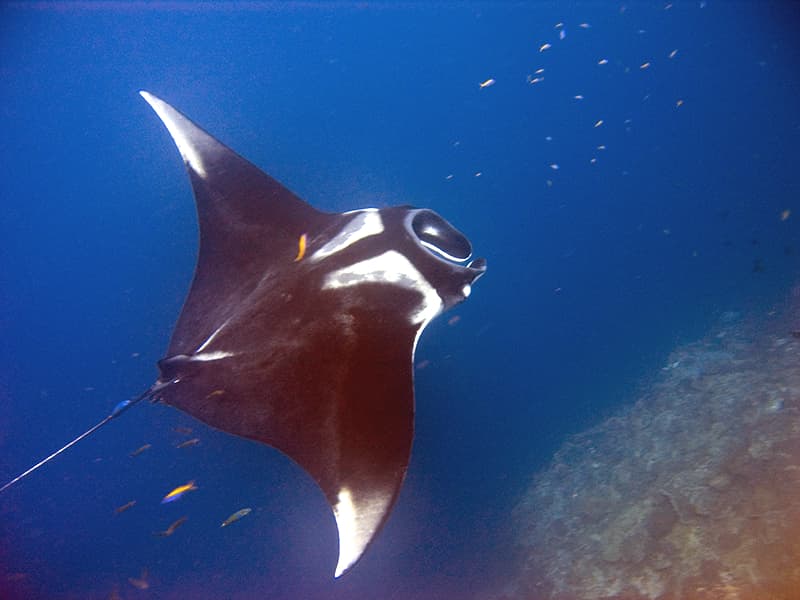
Giant Manta Ray
Mobula birostris
Photo: jon hanson from london, UK · CC BY-SA 2.0 · via Wikimedia Commons
Keep or release?
Release it
It's protected — keeping one is illegal.
Protected: CITES Appendix II; listed as threatened under the US Endangered Species Act in 2018.
TIDE covers New Jersey, Pennsylvania and Maryland rules, plus federal protections everywhere.
Verifying against GBIF…
Conservation status
IUCN Red ListEndangered. Manta rays produce roughly one pup every two to three years, so even light fishing pressure outpaces their ability to recover.
What Endangered means
Facing a very high risk of extinction in the wild.
Legally protected
CITES Appendix II; listed as threatened under the US Endangered Species Act in 2018.
On your plate
Do Not Consume
Listed as threatened under the US Endangered Species Act and protected under CITES. Targeted primarily for gill plates, not for food.
Conservation status and seafood sustainability are two different questions. A species can be Least Concern globally and still be overfished, protected or unsustainable where you are.
Habitat
Open ocean and productive coastal upwellings, diving beyond 1,000 m
Range
Tropical, subtropical and temperate waters worldwide
Size
Wingspan up to 7 m
Diet
Zooplankton, filtered from the water
Lifespan
Up to 40 years
Group
ray
The largest ray in the ocean, with the largest brain-to-body ratio of any fish.
Individual mantas are identified by the unique spot pattern on their bellies, like a fingerprint.
A live manta at a dive site is worth vastly more over its lifetime than a dead one at market — the economic case behind many national protections.
Try this instead
Sustainable seafood alternatives
Giant Manta Ray is protected and must not be taken. These are lower-impact choices that are not.