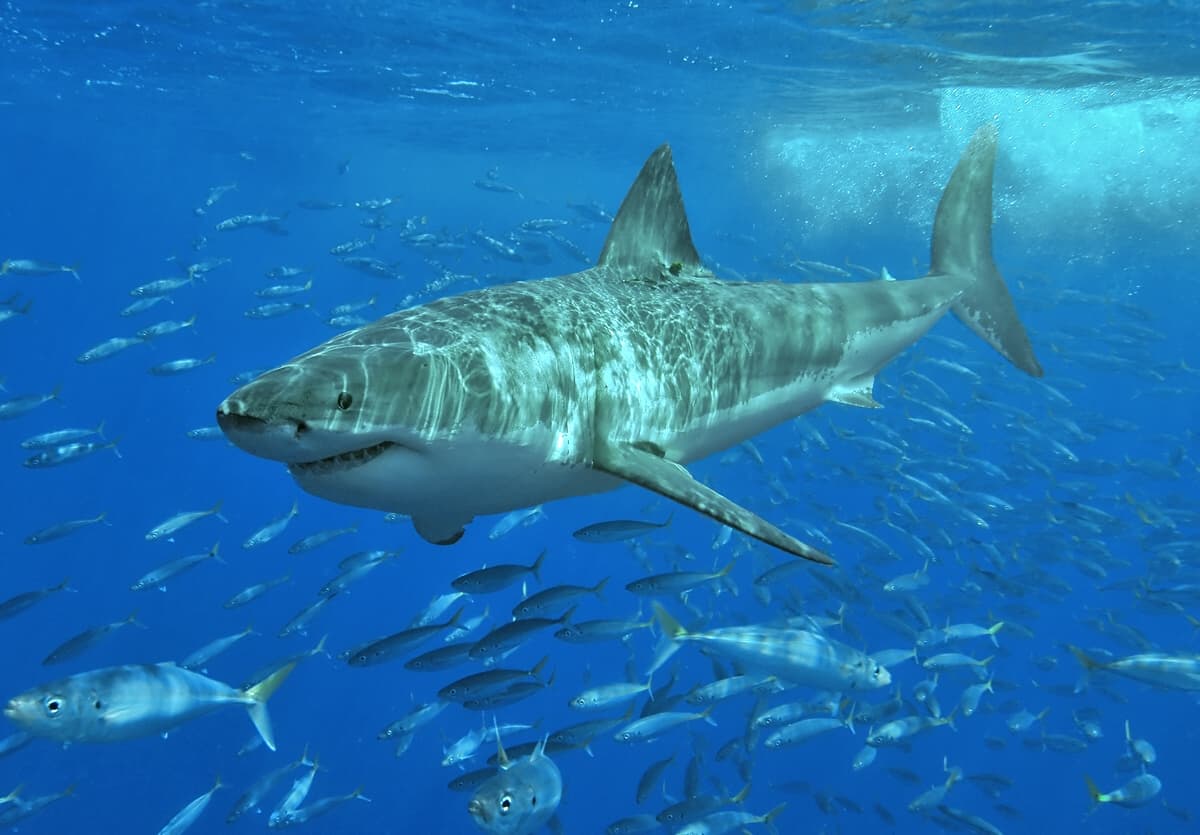
Great White Shark
Carcharodon carcharias
Photo: Pterantula (Terry Goss) at en.wikipedia · CC BY 2.5 · via Wikimedia Commons
Keep or release?
Release it
It's protected — keeping one is illegal.
Protected: CITES Appendix II; protected under US, Australian, South African and New Zealand law.
TIDE covers New Jersey, Pennsylvania and Maryland rules, plus federal protections everywhere.
Verifying against GBIF…
Conservation status
IUCN Red ListVulnerable. Slow growth, late maturity and small litters mean white shark populations cannot absorb much fishing pressure.
What Vulnerable means
Facing a high risk of extinction in the wild.
Legally protected
CITES Appendix II; protected under US, Australian, South African and New Zealand law.
On your plate
Do Not Consume
Protected in the US, Australia, South Africa, New Zealand and elsewhere. Trade is restricted under CITES and targeted fishing is prohibited.
Conservation status and seafood sustainability are two different questions. A species can be Least Concern globally and still be overfished, protected or unsustainable where you are.
Habitat
Coastal and offshore waters, from the surface to 1,200 m
Range
Temperate and subtropical seas worldwide
Size
Up to 6 m and 2,000 kg
Diet
Seals, sea lions, fish, rays and whale carcasses
Lifespan
70+ years
Group
shark
Electroreceptors called ampullae of Lorenzini let them sense the faint electrical fields of a heartbeat.
Tagged white sharks cross entire ocean basins — one tracked female swam from South Africa to Australia and back, about 20,000 km.
No aquarium has kept a great white alive long term; almost everything known about them comes from tagging in the wild.
Try this instead
Sustainable seafood alternatives
Great White Shark is protected and must not be taken. These are lower-impact choices that are not.