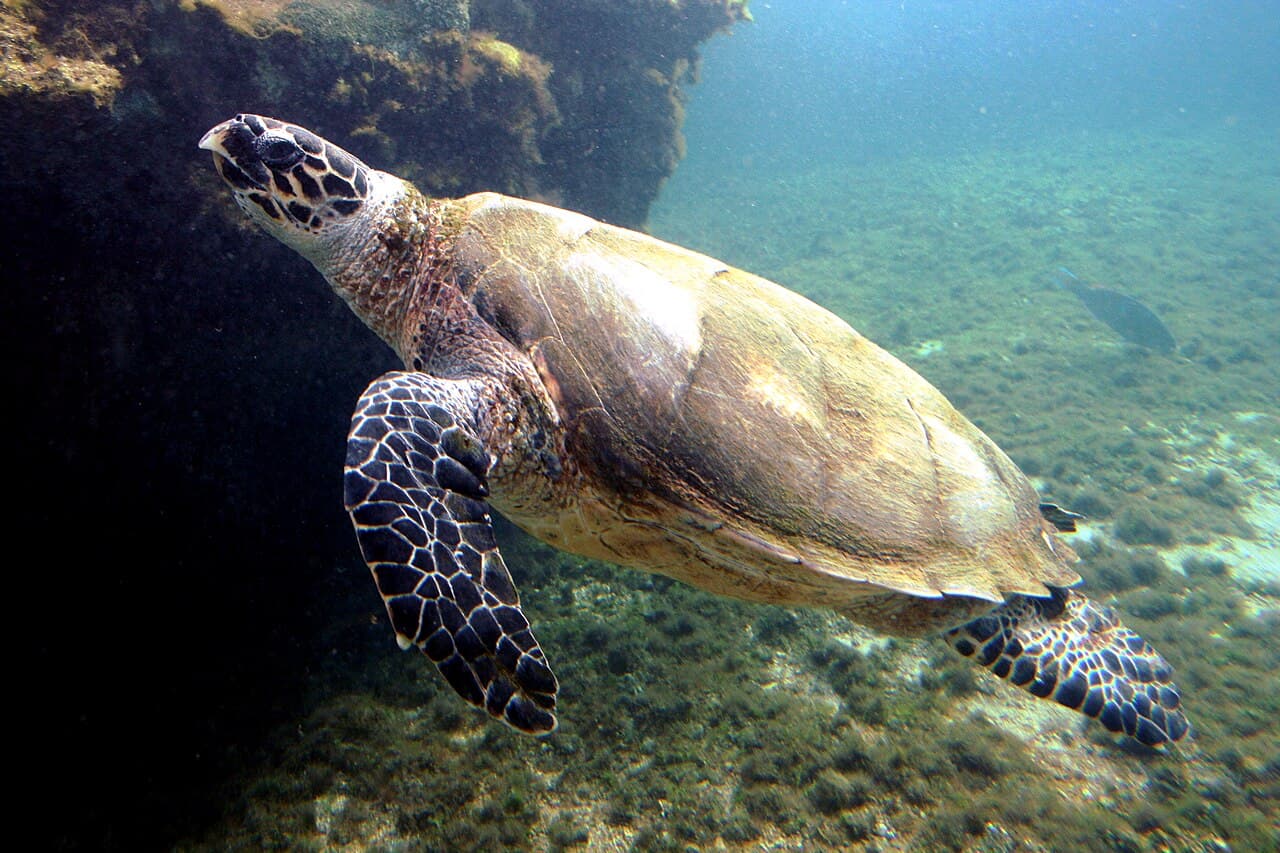
Hawksbill Sea Turtle
Eretmochelys imbricata
Photo: Thierry Caro · CC BY-SA 3.0 · via Wikimedia Commons
Found one?
Call it in
Stranded, injured or hooked? Call NOAA's hotline at (866) 755-6622 and keep people and pets back.
Illegal to take: Protected under the Endangered Species Act — never keep, harm or harass one.
Source: NOAA Fisheries — Sea turtles and recreational fishing ↗ · checked Sep 2026
Verifying against GBIF…
Conservation status
IUCN Red ListCritically Endangered. The global population is estimated to have declined by more than 80% over three generations, driven overwhelmingly by the tortoiseshell trade.
What Critically Endangered means
Facing an extremely high risk of extinction in the wild.
Legally protected
CITES Appendix I bans all international commercial trade. Listed as endangered under the US Endangered Species Act.
On your plate
Do Not Consume
Do not consume, and do not buy tortoiseshell souvenirs — demand for its shell is the main reason this species is critically endangered.
Conservation status and seafood sustainability are two different questions. A species can be Least Concern globally and still be overfished, protected or unsustainable where you are.
Habitat
Coral reefs, rocky areas and shallow lagoons
Range
Tropical Atlantic, Pacific and Indian Oceans
Size
Up to 1 m shell length, 45–70 kg
Diet
Sea sponges, plus anemones and jellyfish
Lifespan
50–60 years
Group
turtle
Its narrow, pointed beak reaches into reef crevices for sponges that almost nothing else can digest.
By removing sponges, hawksbills stop reefs being smothered and make room for reef-building corals.
Its overlapping, patterned scutes are the original source of 'tortoiseshell' — the trade that nearly wiped it out.
Try this instead
Sustainable seafood alternatives
Hawksbill Sea Turtle is protected and must not be taken. These are lower-impact choices that are not.