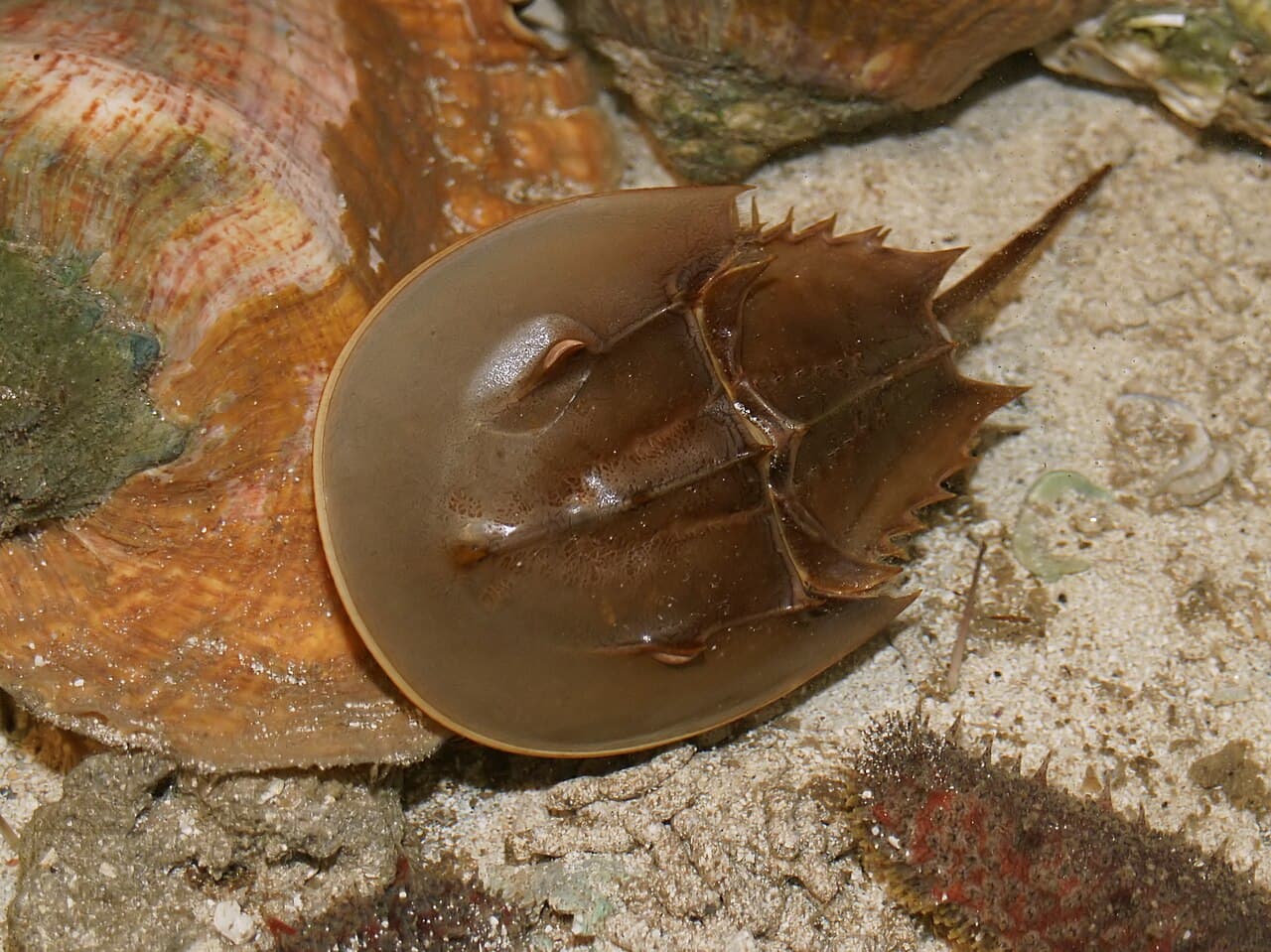
Horseshoe Crab
Limulus polyphemus
Photo: Hans Hillewaert · CC BY-SA 4.0 · via Wikimedia Commons
Found one?
Leave it where it is
It lives its whole life in a small patch of habitat. Watch, take a photo, and let it carry on.
- 01Stranded on its back? Gently flip it by the edge of its shell. Never lift it by the tail.
- 02Otherwise leave it be — spawning crabs come ashore on high tides in late spring.
- 03See a tag on its shell? Report the number; it tracks the population.
Pick your state for the local rules. TIDE covers New Jersey, Pennsylvania and Maryland.
Verifying against GBIF…
Conservation status
IUCN Red ListAssessed as Vulnerable. Harvest for bait and for the medical industry, plus loss of spawning beaches, drove declines — New Jersey has banned taking them since 2008.
What Vulnerable means
Facing a high risk of extinction in the wild.
On your plate
Not Typically Eaten
Not food. It's used as bait and in medicine, and New Jersey bans harvesting it.
Conservation status and seafood sustainability are two different questions. A species can be Least Concern globally and still be overfished, protected or unsustainable where you are.
Habitat
Sandy bays and beaches; spawns at the tide line in late spring
Range
Atlantic coast from Maine to the Gulf of Mexico; the largest population spawns in Delaware Bay
Size
Up to about 60 cm including the tail
Diet
Worms, clams and other small bottom animals
Lifespan
About 20 years
Group
other
Not a crab at all — it's more closely related to spiders and scorpions.
Its blue, copper-based blood is used to test vaccines and injectable medicines for bacterial contamination.
Migrating red knots time their stopover in Delaware Bay to feast on horseshoe crab eggs.