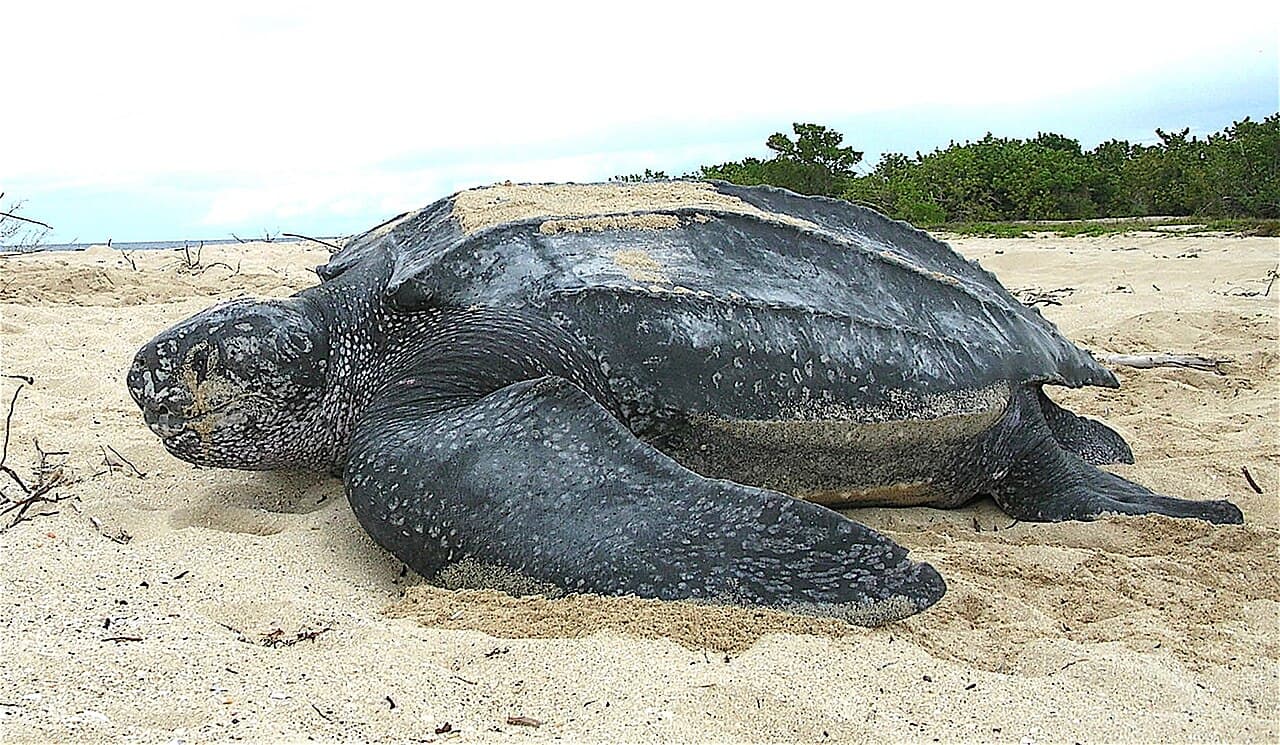
Leatherback Sea Turtle
Dermochelys coriacea
Photo: U.S. Fish and Wildlife Service Southeast Region · Public domain · via Wikimedia Commons
Found one?
Call it in
Stranded, injured or hooked? Call NOAA's hotline at (866) 755-6622 and keep people and pets back.
Illegal to take: Protected under the Endangered Species Act — never keep, harm or harass one.
Source: NOAA Fisheries — Sea turtles and recreational fishing ↗ · checked Sep 2026
Verifying against GBIF…
Conservation status
IUCN Red ListGlobally Vulnerable, but the picture splits sharply by ocean: several Pacific subpopulations are assessed as Critically Endangered while Atlantic nesting numbers are comparatively stable.
What Vulnerable means
Facing a high risk of extinction in the wild.
Legally protected
US Endangered Species Act (endangered) and CITES Appendix I.
On your plate
Do Not Consume
Protected internationally. Egg collection remains a serious illegal pressure in parts of its range.
Conservation status and seafood sustainability are two different questions. A species can be Least Concern globally and still be overfished, protected or unsustainable where you are.
Habitat
Open ocean, from tropical nesting beaches to sub-polar feeding grounds
Range
All major ocean basins — the widest distribution of any reptile
Size
Up to 2 m, 250–700 kg
Diet
Almost exclusively jellyfish and other soft-bodied plankton
Lifespan
Estimated 45–50 years
Group
turtle
The only sea turtle without a hard shell — its carapace is a ridged layer of oily, leathery tissue.
It can dive beyond 1,000 m and keep its body temperature well above the surrounding water, letting it feed as far north as Norway.
An adult can eat its own body weight in jellyfish every day.
Try this instead
Sustainable seafood alternatives
Leatherback Sea Turtle is protected and must not be taken. These are lower-impact choices that are not.