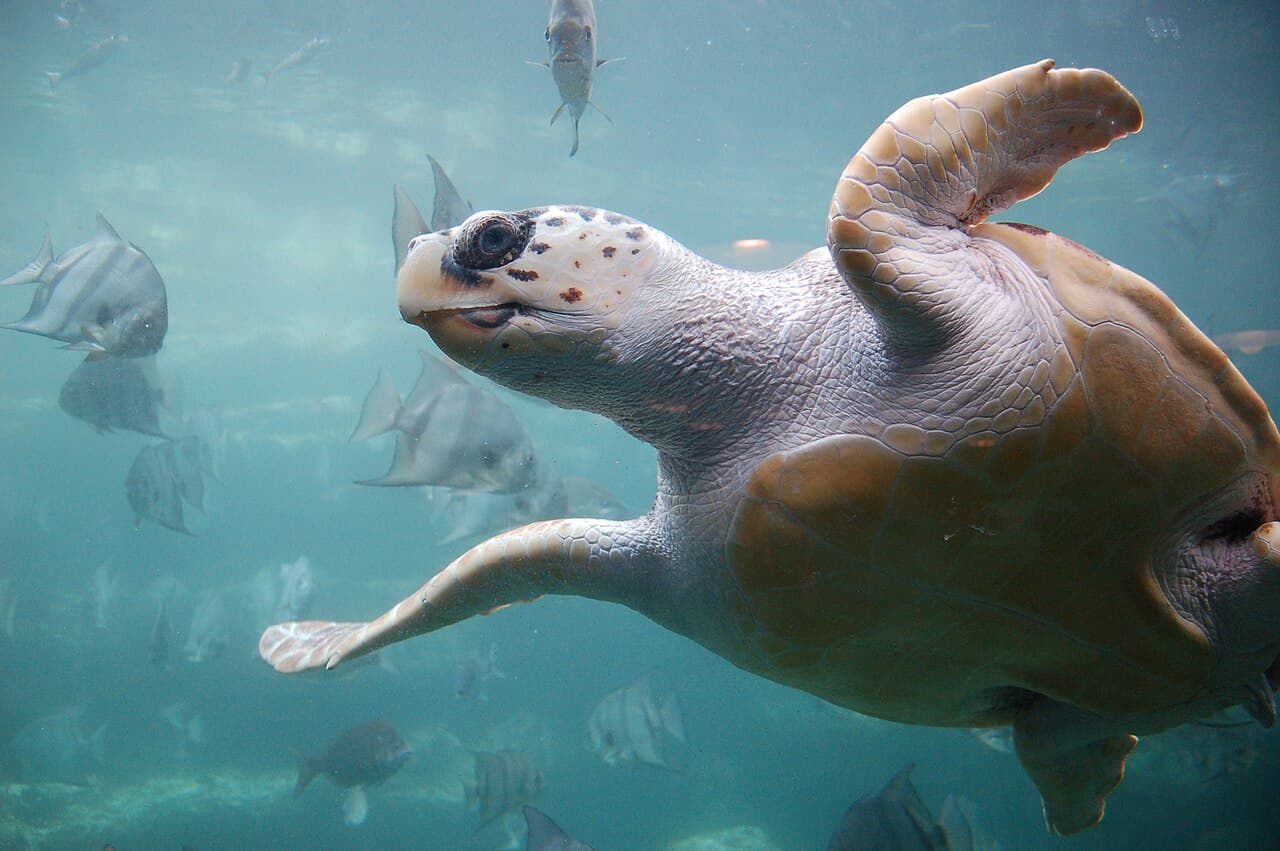
Loggerhead Sea Turtle
Caretta caretta
Photo: ukanda · CC BY 2.0 · via Wikimedia Commons
Found one?
Call it in
Stranded, injured or hooked? Call NOAA's hotline at (866) 755-6622 and keep people and pets back.
Illegal to take: Protected under the Endangered Species Act — never keep, harm or harass one.
Source: NOAA Fisheries — Sea turtles and recreational fishing ↗ · checked Sep 2026
Verifying against GBIF…
Conservation status
IUCN Red ListAssessed globally as Vulnerable. Several subpopulations — including the North Pacific and North Indian Ocean — are assessed separately and carry higher risk categories.
What Vulnerable means
Facing a high risk of extinction in the wild.
Legally protected
Listed under the US Endangered Species Act and CITES Appendix I.
On your plate
Do Not Consume
Protected by law throughout US waters and most of its range. Not a seafood species.
Conservation status and seafood sustainability are two different questions. A species can be Least Concern globally and still be overfished, protected or unsustainable where you are.
Habitat
Continental shelves, bays, estuaries and open ocean as juveniles
Range
Temperate and tropical Atlantic, Pacific and Indian Oceans, plus the Mediterranean
Size
About 90 cm shell length, 80–200 kg
Diet
Hard-shelled prey — crabs, conchs, whelks and horseshoe crabs
Lifespan
70+ years
Group
turtle
The largest hard-shelled turtle on Earth, with jaw muscles powerful enough to crush conch shells.
Hatchlings from Florida ride the Gulf Stream all the way to the Azores and back — a journey that can take a decade.
Loggerheads are the most common sea turtle nesting in the United States.
Try this instead
Sustainable seafood alternatives
Loggerhead Sea Turtle is protected and must not be taken. These are lower-impact choices that are not.