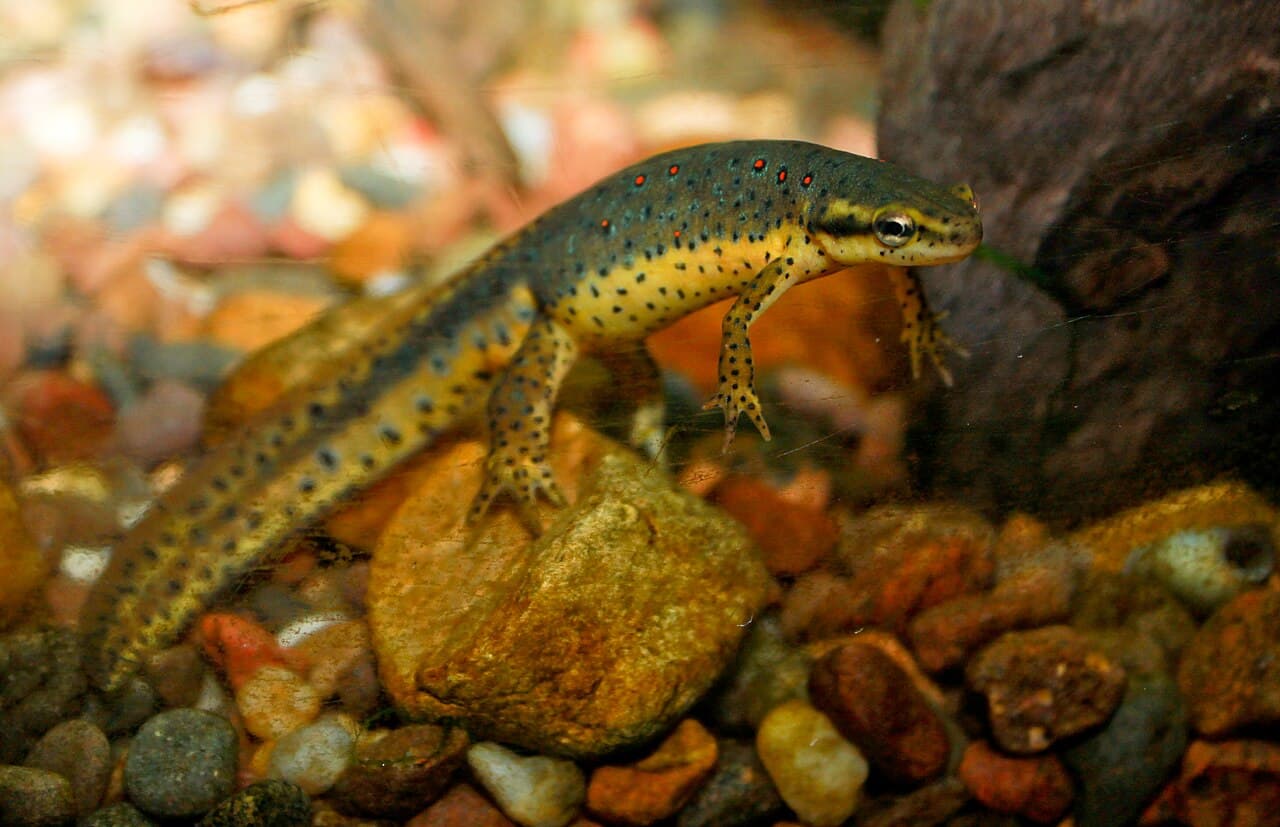
Red-spotted Newt
Notophthalmus viridescens
Photo: Brian Gratwicke · CC BY 2.0 · via Wikimedia Commons
Found one?
Leave it where it is
It lives its whole life in a small patch of habitat. Watch, take a photo, and let it carry on.
- 01Leave it on the trail — efts wander in the open after rain.
- 02If it's on a path, move it to the side it was heading toward, with wet hands.
Stay safe
- Its skin carries a toxin. Don't touch your eyes or mouth after handling it, and wash your hands.
Pick your state for the local rules. TIDE covers New Jersey, Pennsylvania and Maryland.
Verifying against GBIF…
Conservation status
IUCN Red ListLeast Concern and widespread in eastern forests and ponds.
What Least Concern means
Assessed as widespread and abundant. This describes the global population, not fishing pressure or legal protection.
On your plate
Not Typically Eaten
Not food — its skin is toxic.
Conservation status and seafood sustainability are two different questions. A species can be Least Concern globally and still be overfished, protected or unsustainable where you are.
Habitat
Ponds as a larva and adult; damp forest floor as a red eft
Range
Eastern North America
Size
7–12 cm
Diet
Insects, worms, snails and tadpoles
Lifespan
12–15 years
Group
amphibian
It lives three lives: an aquatic larva, a bright orange land-dwelling 'red eft', then an olive-green aquatic adult.
The eft's vivid colour warns predators that it's poisonous.
Efts can spend several years wandering the forest before returning to water.