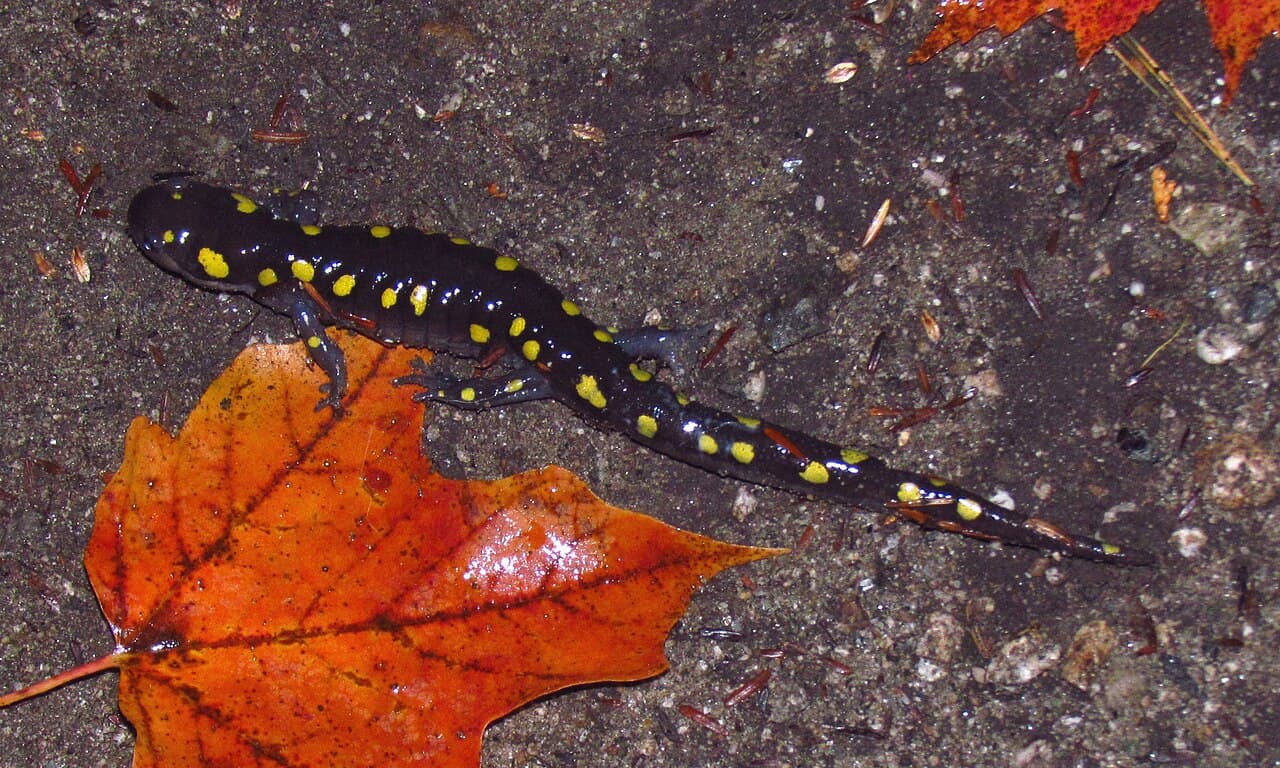
Spotted Salamander
Ambystoma maculatum
Photo: D. Gordon E. Robertson · CC BY-SA 3.0 · via Wikimedia Commons
Found one?
Leave it where it is
It lives its whole life in a small patch of habitat. Watch, take a photo, and let it carry on.
- 01On a rainy spring night on a road? Carry it across in the direction it's heading.
- 02Wet your hands first, and make sure they're free of sunscreen, lotion or bug spray.
- 03Put back any log or rock you lifted exactly as it was.
Stay safe
- Its skin secretes mild toxins — wash your hands after handling.
Pick your state for the local rules. TIDE covers New Jersey, Pennsylvania and Maryland.
Verifying against GBIF…
Conservation status
IUCN Red ListLeast Concern, but it depends on small seasonal 'vernal' pools that are easy to fill in and pave over.
What Least Concern means
Assessed as widespread and abundant. This describes the global population, not fishing pressure or legal protection.
On your plate
Not Typically Eaten
Not food.
Conservation status and seafood sustainability are two different questions. A species can be Least Concern globally and still be overfished, protected or unsustainable where you are.
Habitat
Moist woods, breeding in fish-free vernal pools
Range
Eastern North America from Nova Scotia to Georgia
Size
15–25 cm
Diet
Worms, insects, slugs and spiders
Lifespan
20 years or more
Group
amphibian
On the first warm, rainy nights of spring, whole populations migrate to their breeding pools at once — 'Big Night'.
Green algae live inside its eggs, a rare partnership between an animal and a plant-like cell.
It spends most of the year underground and is rarely seen.